Physical Address
304 North Cardinal St.
Dorchester Center, MA 02124
Physical Address
304 North Cardinal St.
Dorchester Center, MA 02124

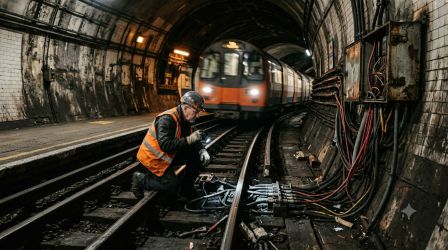
London, 22 September 2026 — Londoners are feeling the effects of nearly a decade of deferred maintenance on the Underground, with a growing backlog of unrenewed tracks, signals and lifts now blamed for a sharp rise in delays and cancellations across the network.
According to figures reported this week by transport site IanVisits and cited at a London Assembly Budget and Performance Committee session, so-called “lost passenger hours” from disruption have already reached 830,000 so far this year — more than three times the 250,000-hour ceiling the network rarely exceeded before the pandemic. Weekly incident counts linked to asset condition, once capped below 200 between 2015 and 2022, are now regularly topping 350.
A problem years in the making
The roots of the crisis trace back to a 2017 decision to scale back spending on infrastructure renewals, taken partly because some assets could tolerate postponed work and partly because TfL was banking on a revenue boost from the then-upcoming Elizabeth line. That bet on future income, combined with the government’s 2018 withdrawal of TfL’s annual operating grant and the financial shock of the pandemic, left renewals spending far below what the network actually needed.
TfL’s own finance chiefs have told City Hall that keeping the Tube’s tracks, signals, lifts and other assets in a stable state of repair requires between £1.1 billion and £1.2 billion a year. Over the five years to 2025/26, actual spending averaged only around £700 million annually — and in the depths of the funding squeeze in 2020, it fell as low as £400 million, according to evidence given to the Assembly’s Budget and Performance Committee by TfL’s chief financial officer.
42% of track in “very poor” condition
The consequences of that shortfall are now visible in the state of the physical network itself. A TfL report presented to transport bosses found that 42 per cent of London Underground track is classified as being in “very poor” condition, with a further 17 per cent rated “poor” — figures that prompted sharp criticism from Assembly members across the political spectrum. City Hall Conservatives transport spokesperson Susan Hall said the figures should “set alarm bells ringing.” inkl
TfL says it has been steadily increasing investment, with renewals spending expected to reach around £800 million this year and average roughly £860 million annually over its current business plan — still short of the £1.1–1.2 billion benchmark. Officials maintain that safety has not been compromised, but acknowledge the gap introduces real risk to reliability. The cumulative shortfall across the network’s tracks, tunnels, stations, bridges and thousands of bus stops is now estimated at up to £6.5 billion.
What it means for commuters
For passengers, the effects are already tangible: more frequent lift and escalator failures, signal faults, and knock-on delays that are increasingly hard to miss on some lines, even if a slightly longer gap between trains often goes unnoticed. With TfL simultaneously forecasting a £128 million operating loss this year and London boroughs warning of their own multi-billion-pound funding gap, the renewals backlog adds to a wider picture of strained public finances across the capital — one that transport chiefs say will take sustained, above-inflation investment over several years to unwind, rather than a single quick fix.
TfL has pointed to a series of efficiency measures — including drone inspections, improved asset-condition data and revised maintenance cycles — as ways to stretch the available budget further. But with incident rates still climbing and government funding settlements remaining uncertain year to year, transport watchers say the pressure on ageing infrastructure is likely to remain one of the defining stories of London’s transport network well into 2027.
Sources